
MOSAIC • MOSAIC • MOSAIC • MOSAIC

Christmas Crackers
A Christmas “cracker” is a festivity meant to be held before dinner on Christmas Eve. Two people pull the paper cracker from either side, until it pops open and the gifts inside fly out.
My family and I do this every year!!

Ballokume
These are cookies made out of corn flour used to celebrate the coming of spring/summer (Diten e Veres).
My mom is Albanian and makes us these every March for the coming of spring.

Boston Pride Parade
The main Pride Parade that happens in Boston during the month of June, celebrating diverse gender identities and sexual orientations.
Pride in Boston is very important to me. It is an amazing and extremely welcoming community that lifts each other up.

Samba
Samba is a beautiful and vibrant Afro-Brazilian dance and music genre that originated in the 19th century in Bahia, rooted in Congolese and Angolan traditions brought by enslaved people. It evolved from the samba de roda (circle dance) in the Northeast before migrating to Rio de Janeiro, where it became the cornerstone of Brazilian Carnival and national identity. Now it is known and danced by every corner of Brazil.
I was born in Rio de Janeiro and this dance is very big in my family. I know how to dance it and it serves as a powerful connection to my culture and my hometown.

Tea Time
Black Tea originated in China in the 16th to 17th century.
It's a great treat that my family enjoys whenever we come together. My grandmother brews it with cinnamon and sugar, while my dad makes it plain with milk. I enjoy both, and it's a nice to drink while enjoying time together leisurely!

Baseball
Baseball is a sport played between a bat and a ball, two teams of nine players who alternate between batting and fielding. The objective is to score runs by hitting the ball and advancing counterclockwise around 3 bases and then to home plate. A standard game consists of nine innings, with the team scoring the most runs winning.
I'm Dominican and baseball is known as my country's national passion. Baseball is played by children in streets and parks.

Midwestern state fair
Not a very traditional tradition, but for at least 4 generations in my family we have been visiting the state fair in the state where my parents grew up. For the generation of my siblings, cousins and I, the fair has always fallen right before our school year begins, making it a final hurrah before the return to school. Every year the fair is a bit different but a few things stay the same.
This is a tradition that connects me to my great grandfather and grandfather through the enjoyment of this special fair. It is also an opportunity to connect with my siblings and cousins every year.

Soba Noodles
Soba, Japanese noodles made from buckwheat flour, is typically eaten on New Year's Eve. The long noodles symbolize a long life, so eating them is said to make you live longer.
I eat soba noodles every year with my family. We don't always follow Japanese customs, but this is a tradition we never miss.

Corned beef and cabbage
Corned beef and cabbage is a meal made by Irish-Americans, and is eaten by many families on St. Patrick's Day to celebrate Irish-American resilience and culture. It includes salt-cured brisket (corned beef) simmered with potatoes, carrots, onions, and cabbage.
My family and I make this every St Patrick's Day for dinner

Dumpling making
Originated in China and were meant to resemble yuanbao, or traditional Chinese money. It symbolizes prosperity and luck in the Chinese culture.
Grew up with grandfather making dumplings and learning from him. Continued throughout my life making dumplings with my parents and hope to do the same one day with my own children.

Kwanzaa
Kwanzaa was created in 1966 by Dr. Maulana Karenga, a professor of Black Studies, to unite African Americans following the Watts riots by celebrating African heritage and culture. It is a week-long, non-religious holiday running from December 26 to January 1, focusing on seven principles (Nguzo Saba) inspired by African "first fruit" harvest celebrations. Founder: Dr. Maulana Karenga, a scholar and activist, established the holiday in California during the Black Power movement to promote cultural pride. Meaning: The name comes from the Swahili phrase matunda ya kwanza, meaning "first fruits." An extra "a" was added to fit seven letters for the seven principles. Inspiration: The festival is based on traditional African harvest celebrations, such as those of the Ashanti and the Zulu, aimed at promoting community and family. Seven Principles (Nguzo Saba): Celebrated over seven days, each day focuses on a specific principle: Umoja (Unity), Kujichagulia (Self-Determination), Ujima (Collective Work and Responsibility), Ujamaa (Cooperative Economics), Nia (Purpose), Kuumba (Creativity), and Imani (Faith). Cultural Significance: It was designed as a cultural, rather than religious, holiday, allowing people of all faiths to participate. Symbols: Key symbols include the kinara (candle holder), mishumaa saba (seven candles), and items representing history and community.
Kwanzaa is a holiday I celebrate with my family. During the 7-day celebration, we visit Black-owned restaurants, support Black-owned businesses, and create handmade gifts together. This past Kwanzaa, we created a family meal together. Everyone came together to make their favorite dish, and we enjoyed each other's company while eating some delicious food.

Cumbia
Cumbia is a foundational Latin American music and dance genre based around a galloping rhythm in a moderate to moderately fast tempo. It originated in Colombia, combining African, indigenous, and Spanish influences, but has since gained prominence across continental Latin America. Over the decades, it has been incorporated into various national festivities and traditions, making its mark at concerts, parades, and dance halls. Over time, it has been adapted to each country's culture and the time period of music, making it a timeless and treasured genre.
Cumbia music has been around me all the time while growing up in everyday life and especially at parties. Artists including Los Angeles Azules, La Sonora Dinamita, Selena Quintanilla, and Grupo Frontera have all contributed to my music taste.

Chinese calligraphy
Chinese calligraphy is the ancient art of artistic handwriting in China. Each period had their own styles of writing, so chinese calligraphy has evolved countless times over the centuries: seal, clerical, semi-cursive, cursive, and regular scripts, just to name a few.
I write Chinese calligraphy every year during Spring Festival for 春联 (chunlian; Spring Festival couplets hung on doors) and 福 (fu; Good luck character) for family and friends.

Red Egg Cracking (Tsougrisma)
A Greek Orthodox tradition where one boils and dyes eggs red. The red color symbolizes Christ's blood and the cracking symbolizes His resurrection and emergence from the tomb. In order to play the game, one taps the tips of one of the red eggs against a family or friend's egg end to see which egg is stronger. This goes on until you run out of eggs. While cracking the eggs the first person says, "Christos Anesti" (Christ has risen!). And the response to this (during the game or not) is "Alithos Anesti" (Indeed he has risen!). Some families make use of the broken eggs to eat with salt and vinegar or make a small appetizer tray.
I practice this tradition every year with my extended family during Orthodox Easter.

Piñata
A container typically made from papier-mâché, decorated with streamers and filled with candy. It is used at holidays or parties for children to break with a stick and gather the candy when it falls as a celebration in Mexican culture.
.

Danish New Year's Celebrations
Every New Year's Eve, Danes across the nation and the world tune into the King or Queen's speech at 6pm Danish Time. Later, as the clock strikes midnight, Danes jump into the New Year by jumping from a chair, couch, table, or other raised surface. Finally, the Danish capital, Copenhagen, is lit up by fireworks. Legal for just New Year's Eve and Day, hundreds of thousands of fireworks are set off by all sorts of people in the city and across the country. The sheer abundance of fireworks makes the city flash like it was being bombed, and people are encouraged to wear safety glasses when going out that night.
.

Prize Declamation
Per the longstanding tradition at Boston Latin School to declaim powerful passages and poems in our English classes, Prize Declamation rewards the best declaimers. Declaiming builds speaking skills, confidence, and broadens one's literary knowledge.
Although I've never competed in Declamation outside of the classroom, I enjoy watching Prize Declamation and am in awe of those who compete!

Wigilia
This is a Polish tradition on Christmas Eve wishing luck in the year to come with others. You break off pieces of a wafer and give it to others while wishing them well in the new year.
I am Polish and it's a family tradition.

Gifting Red Envelopes
The practice of gifting family members or friends red envelopes containing money has Chinese origins tracing all the way back to the Han Dynasty. The tradition began as a way to ward off evil. Today, it has evolved to symbolize good luck and prosperity, and it's a way to connect with loved ones.
Every Chinese New Year or birthday, my relatives gift me red envelopes!

Cachupa
Cachupa is a Cape Verdean dish that is basically a stew, consisting mostly of corn, with an addition of meat, beans, vegetables, and sometimes sweet potatoes. It was mostly created by enslaved people in the 15th century during colonial times.
Cachupa is one of my favorite Cape Verdean dishes and my family and me usually eat it during major events like Thanksgiving and Christmas, but sometimes my grandma just makes it on a random whim and I LOVE it every time.

Southern Lion Dance
According to legend, a strange creature appeared one day and preyed on men and beasts. Its name was nien (which sounds like the Chinese word meaning “year”). It was so fast and fierce that not even the ox or the tiger could slay it. In despair, the people turned to the lion for help. Rushing to meet the terrible foe, the lion wounded the creature who ran away. As the nien fled, it turned and screamed, “Beware! I will return and take my revenge.” A year later, the nien did return. By then, the lion was so busy with his new job guarding the emperor’s gate that he could not help protect the village. The villagers hurriedly took some bamboo and cloth and made an image of the lion. Two men crawled inside and made it run and prance and roar. Faced with this awesome creature, the nien ran away again. And so, on the eve of the Lunar New Year, lions dance, sending menace and evil away for yet another year.
As an Asian-American, this is an important aspect of our culture and gives us a way to be connected to our homes. I do lion dance and it has made me feel more connected with my heritage and has helped me connect with other Asian women.

Hinamatsuri (Girl's Day)
In Japan, every March 3rd is known as Hinamatsuri. Hinamatsuri translates to doll festival or girl's day. Families display elaborate dolls that are said to take away bad luck and bring good fortune for the daughter(s) of the family. The dolls usually represent an ancient Japanese royal court. The dolls are called ohinasama dolls.
Every year, as far back as I can remember, my mother has put up our ohinasama dolls up on a little spot near our TV. This is a tradition that I find very important to me and my family.

Soup Joumou
It is a new year dish that we usually put in very big pots to share with all of our friends and family. But my family in particular eats Soup Joumou every day for the entire month of January. Soup Joumou was created to celebrate Haiti's independence from France and becoming the first black republic.
I was born in Haiti so I remember drinking Soup Joumou since I gained consciousness.

Inti Raymi
Inti Raymi is a traditional holiday celebrated by the Inca Empire before European arrival in the Americas on June 24th, and literally means the Festival of the Sun (or Sun God) in Quechua. It is a day full of colorful outfits and dances that are made to signify the changing seasons, and celebrating the light and good harvest given by the Sun God Inti. Today Inti Raymi is still celebrated in Cusco, as a way for Andean people to connect themselves to their Pre-Columbian roots.
I celebrate Inti Raymi with my family, and have gone home to Cusco to visit my family there while we take part in the festivities. It is the most colorful you will ever see a city, with everyone hanging the rainbow flag of the Incas, and every person and building is dressed with all of the colors of the rainbow from the sun rising to its fall.

Christkindlmarkt traditions like Candle lighting rituals
The Christkindlmarkt candle lighting tradition is a living German seasonal ritual. Each December participants gather to light one candle per week of Advent on a central wooden pyramid or display. This act symbolizes the gradual return of light and hope in winter. As each flame is kindled, the group sings traditional German carols and shares family stories from Christkindlmarkt visits and experiences Gemütlichkeit, the warm feeling of togetherness. This simple oral tradition passed down for generations focuses only on the communal candle lighting moment itself. It fosters cultural pride and connection without stalls or crafts or baked goods.
My grandma when I was growing would always tell me stories of the traditions her family did before she was even born. My grandmother was a second generation immigrant so she never lived Germany but her parents still prided themselves to German tradition. I this tradition specifically because my grandmother always told me stories from her childhood looking back on memories with her family lighting candles.

Tabbouleh
Made of parsley, lemon, lime, tomatoes, onions, and wheat, Tabbouleh is a salad-like dish from Lebanon. It makes for a fresh side plate or snack in the summer, but is delicious to enjoy all year round. Also, the recipe for Tabbouleh can be varied easily based on personal taste or season, making it quite versatile.
I used to make this with my grandparents, and I find it goes best with chicken!

Caribbean Carnival
When slavery was abolished, former slaves would practice rituals and traditions as an act of rebellion. It was their way of celebrating freedom and remembering ancestors.
I, myself, am Caribbean, and my family celebrates Carnival with each other. My family has been in Boston for a while, and my older relatives also celebrate and attend the parade.

German Christmas pyramid
The German Christmas pyramid, or Weihnachtspyramide, is a wooden decoration typically set out around the winter holidays. When lit, the candles at the base of the pyramid spin the wooden flaps at the top, rotating the inside structure. Figurines and decorations are placed within each tier to create scenes that tell stories. Such scenes include woodland and nativity settings.
My household sets up a two foot-tall pyramid every holiday season!

Garba/Raas
Garba and Raas is a traditional Gujarati folk dance that we still do on special holidays like Navratri.
I love garba so much, its so fun to be able to go to a garba with your friends and cousins and just hang out and dance. Not only is it a great way to exercise but it keeps us connected to our culture.

Haitian Flag Day May 18th
On May 18th every year Haitians all over the world celebrate our culture specifically with pride in our flag. (submitted by Meggan Jeannot)
Over the past few decades, there has been great turmoil in Haiti and the diaspora is spread out all over the world. With this day we unite with each other and celebrate unity. In Boston specifically, every Sunday following May 18th there is a parade, where we celebrate with music, dancing, food and each other.

Dunkin Donuts Iced Coffee in Winter
Dunkin' Donuts is a global coffee and baked goods chain founded in Massachusetts in 1950. Dunkin' Donuts offers iced coffee throughout the year. Drinking a Dunkin's iced coffee in winter is part of many Bostonians' commutes to work, as well as a beverage enjoyed while shoveling snow or taking part in outdoor activities. Drinking a "Dunkin's iced" is also associated with Boston's fast pace of life, Bostonian's toughness and resilience, and patriotism as an alternate to tea.
.

Beef Wellington
Beef Wellington is a classic British dish with a beef tenderloin coated in pâté, wrapped in bacon, and then encased in puff pastry before being baked until golden brown.
My grandmother and mother make Beef Wellington every Christmas!

Events on Boston's Rose Kennedy Greenway
The Greenway is a park that stretches through several neighborhoods in Downtown Boston (including the Financial District, Waterfront, Chinatown, and North End). Its green space and plazas provide many opportunities for community engagement, focused especially on promoting small businesses and government services.
I live near the North End and go on walks through the Greenway often. Events I've attended include the annual summer-long thrift store market, the horror movie watch party hosted by the Coolidge Corner Theater around Halloween, and more!

Drinking Water During Band
Every Music Night at BLS before the musicians go out to perform, there is a table outside of the auditorium entrance and musicians often drink many cups to hydrate.
I am a part of the band
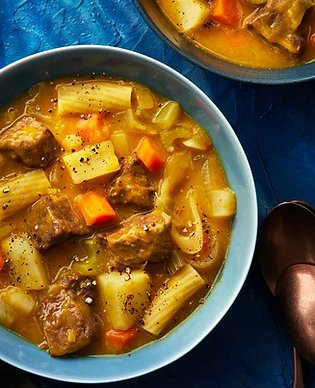
Soup Joumou
For Haitians, soup joumou is a symbol of freedom and independence. During French colonial rule, enslaved Haitians were forbidden from eating it—it was reserved for slave owners. After Haiti won its independence in 1804, people began eating soup joumou on January 1st to celebrate liberation. (Submitted by Beverly)
Soup joumou is really important to me because it represents Haitian culture and history. It’s not just delicious—it symbolizes breaking free from oppression and celebrating freedom. Every time I think about it, it feels like a reminder of strength, pride, and resilience.

Tet
It is the most important holiday in Vietnam, and celebrates the Lunar New year, and the arrival of spring. It is a time for family reunions, honoring ancestors, and new beginings. It often starts in late January or early Feburary.
I am Vietnamese so I celebrate it every year.

Kolo
Kolo is a traditional dance found in Slavic countries such as Serbia, Bosnia i Herzegovina, and Croatia. Participants usually hold hands or waists in a chain or circle, moving with subtle coordinated steps. It's usually preformed at weddings and festivals, featuring a rapid "three step, hop" rythm while being accompanied by traditional folk instruments, like the frula (shephards flute) and tamburica (stringed instruments). Many regions have different styles of this dance, and each have their own complexity to it.
I'd see people doing this dance in the streets of Bosnia and Croatia, and eventually learned to do it with my family.

Dia de los muertos
Dia de los muertos, which is also commonly known as day of the dead, is very important in Mexican culture. Day of the dead is a day where a family will get together to make an ofrenda, or alter, for the deceased family or friends. You put a picture of the person if you have one, their favorite food, an object that connects to them, and bunches of marigolds.
We put up an ofrenda each year, around halloween, because we have family who has passed away, and it is our way of honoring them.

Plov
This is a hearty one-pot rice dish featuring tender meat (usually beef or lamb), carrots, onions, and aromatic spices like cumin and garlic. Stemming from Central Asian traditions, this staple is now a favorite in Russia, known for its layered flavors where carrots and onions are sautéed with meat before steaming with rice.
I grew up with my uncle and grandmother making this dish on Orthodox Easter and Christmas

Boston Pops
The Boston Pops, hosted at Boston Symphony Hall during the holiday season, shares the holiday spirit through music. Each year, Pops includes arrangements of classic carols with the Tanglewood Festival Chorus, a sing-along, and a visit from Santa. Led by famous conductor Keith Lockhart for decades, this performance is certainly a staple of Boston culture.
Every year, I attend one night of Boston Pops with my parents. I'm very grateful to share this experience with them!

Red couch photography for Chinese adoptees
The red couch was homed in the White Swan Hotel in Guangzhou, China. This was the primary approved hotel for American families adopting from China due to its proximity to the US Consulate. It was a popular tradition to photograph your adopted child on this couch as a symbol of connection and new beginnings from their home in China to the US. As of 2022, the couch now lives in Holt International’s Headquarters in Oregon and it displayed to celebrate Chinese Adoptee history.
I am a Chinese adoptee and I have taken photos on the red couch along with the other girls in my orphanage.

Irish Bagpipes
Bagpipes are an instrument played at parades, funerals, and other celebrations across Ireland and Scotland. Bagpipes create sound by the musician blowing air into a pipe, which produces one of nine notes. Bagpipes are an important cultural aspect of both Ireland and Scotland and the instrument is used to unite communities.
My personal connection to bagpipes is watching my family and friends play the bagpipes at major events like sporting matches, parades, and processions.

Tinikling
Tinikling is a traditional Filipino folk dance where dancers step in between moving bamboo sticks in a steady rhythm.
BLS Southeast Asian Leaders (SEAL) performs modern tinikling routines every year during Asian Night and Tet Festival!

Matzah bark
During Passover, Jewish people celebrate their ancient ancestors' liberation from slavery in Egypt by not eating leavened food for 8 days. Instead of bread, we eat matzah, which is basically a cracker. Many families today have a tradition of making "matzah bark," which is a dessert consisting of matzah, toffee, and chocolate baked together.
My favorite passover food

Chanting "It's all over" at the end of the year
All of the seniors at BLS chant during their last lunch "It's all over, you're still here!" and then continue to chant that as they leave the school at the end of their last day.
.

Pasando el Huevo
Pasando el Huevo (or La Limpia de Huevo) is a ritual rooted in Brujeria, a mixture of Indigenous spirituality across Latin America (namely Southern Colombia), and western European ideas of religion and healing. It involves rubbing an egg along parts of your body that is afflicted with an illness, and then blowing on the egg three times. After you do so the negative energy in your body will be trapped in the egg, and you crack it into a clear glass of water. Then you can place it on a windowsill and the sunlight will burn away the bad energy in the egg. If the yoke breaks then there was a large amount of bad energy that the egg removed, but if the yoke has a small circle near its center that looks like an eye, then you've been cursed with Mal de Ojo and need to see un Brujo to get it removed.
When I was younger my grandmother would perform this ritual on me all the time to cure me of fevers, stomach-aches, and the like. During the flu season when our whole family would get sick, our windowsills would be dotted with glasses of eggs in water.

Tostones with mayo-ketchup
Fried and salted plantain eaten in the Caribbean, especially in Puerto Rico. It's often paired with a mixture of mayonnaise and ketchup.
my fav Puerto Rican food.

German stollen
A nutty, fruity bread baked during the wintertime by many German families. The preparation process is labor-intensive, including hand-shaping and several weeks of aging for flavor development.
Each year, my Oma (Grandma) makes many loaves of this bread as a symbol of her love.
MOSAIC • MOSAIC • MOSAIC • MOSAIC